Pain relief balm OEM turns a brand idea into a shelf-ready topical analgesic in 6-10 weeks. This guide covers cooling and warming actives, wax and butter base systems, tin, stick, tube and roll-on packaging, ISO 22716 GMP production, FDA cosmetic and EU CPSR compliance, a 7-step private label program, and the checklist B2B buyers use to qualify contract manufacturers.
1. Why Pain Relief Balm OEM Matters for B2B Brand Owners
Pain relief balm OEM gives B2B brand owners a direct route into the topical analgesic category without building a factory, hiring a formulation team, or carrying regulatory risk alone. A balm is a semi-solid topical dosage form built on waxes, butters, and oils, and it is one of the fastest-moving formats in consumer pain relief because it is portable, mess-free, and easy to apply on joints, muscles, and temples. For distributors, pharmacy chains, Amazon sellers, and emerging wellness brands, sourcing balm through a contract manufacturer converts a 12-18 month product development timeline into a 6-10 week launch cycle.
KONGDY has manufactured consumer health and topical care products for 36 years at its ISO 22716 GMP certified facility, and its pain relief balm OEM program covers formulation development, stability testing, regulatory documentation, packaging engineering, and private label production. Brand owners working with KONGDY receive sample batches, custom formulation support, and export-ready documentation for FDA cosmetic, EU CPSR, and Asia market compliance. The result is a balm line that fits a brand's positioning instead of a generic white-label product with a new sticker.
This complete guide to private label manufacturing explains how pain relief balm OEM works, which actives and bases drive performance, how packaging and applicators change perceived value, what certifications buyers should verify before signing, and how to run a 7-step private label program from brief to first shipment.
2. Pain Relief Balm OEM: Private Label Manufacturing Overview
Pain relief balm OEM private label manufacturing means the contract manufacturer produces a finished balm to a brand owner's specification, then packs it under the brand owner's label, artwork, and barcode. The brand owner owns the trademark and the customer relationship; the manufacturer owns the certified facility, the equipment, and the quality system. This split is what makes private label attractive to B2B buyers entering the topical analgesic market without capital expenditure.
2.1 What Pain Relief Balm OEM Includes (KONGDY)
A complete pain relief balm OEM scope typically bundles formulation development, raw material qualification, pilot batching, stability and microbiological testing, filling and sealing, carton and label production, regulatory documentation, and export packing. KONGDY delivers this scope under one roof so brand owners avoid coordinating four or five separate suppliers. Request a written scope-of-work template before you compare quotations.
2.2 How Private Label Differs from White Label (KONGDY)
White label supplies a ready formulation that many brands sell under different names, while private label develops or customises a formulation that the brand owner can differentiate. For pain relief balm, private label lets a brand control menthol loading, warming intensity, scent profile, texture, and packaging format. KONGDY supports both models and recommends private label for buyers planning exclusive listings or distributor agreements. Get a private label versus white label comparison for your category.
2.3 Typical Order Volume and Commercial Terms (KONGDY)
Pain relief balm OEM order volume usually starts at a pilot batch for stability and shelf-life validation, then scales to commercial production. Commercial terms cover unit price tiers, tooling and plate charges for printed packaging, artwork revision limits, lead time, Incoterms, and payment schedule. KONGDY structures tiered volume pricing and confirms tooling costs in writing before sampling. Request a tiered balm quotation with tooling breakdown.
2.4 Who Buys Pain Relief Balm OEM (KONGDY)
The main buyers are brand owners, importers and distributors, pharmacy and drugstore chains, e-commerce and marketplace sellers, sports and recovery brands, and trading companies building private portfolios. Each buyer type has different documentation needs, from CPSR files for EU importers to monographed actives for US pharmacy buyers. KONGDY tailors the documentation pack to the destination market. Schedule a market-entry documentation consultation.
3. Pain Relief Balm OEM: Formulation and Active Ingredient Options
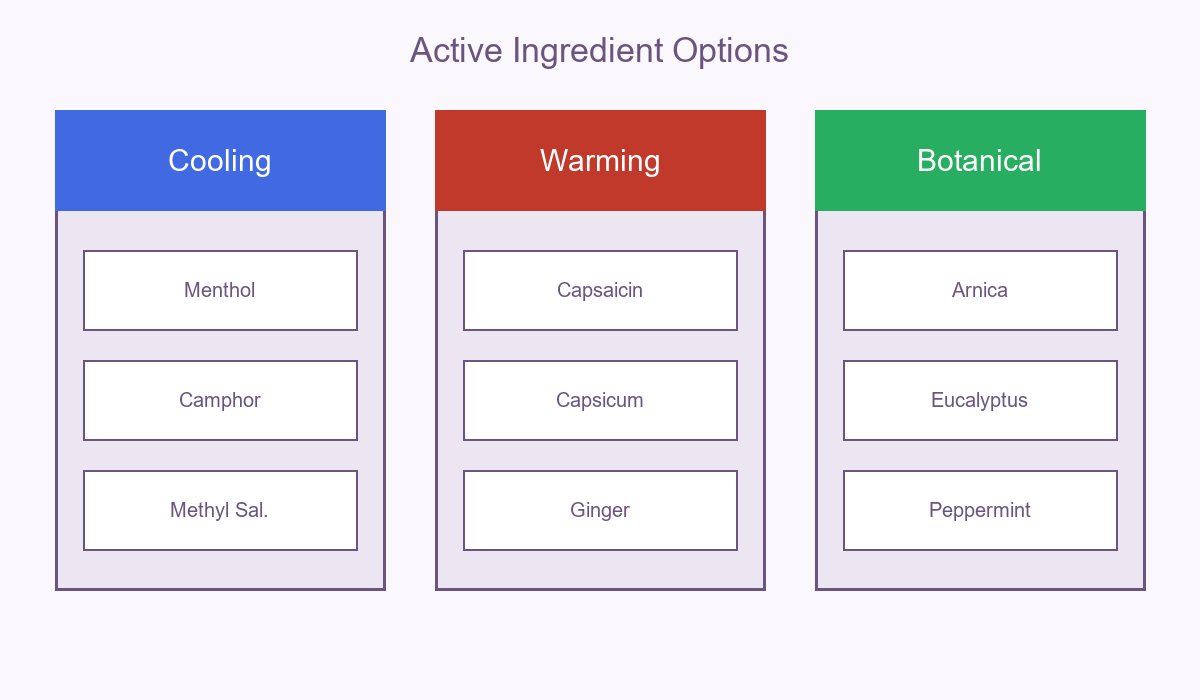
Formulation is the single biggest lever on how a pain relief balm performs and how it is regulated. Actives split into cosmetic-positioned ingredients that cool or warm the skin and drug-positioned actives that make analgesic claims, and the choice determines labelling, claims, and market access.
3.1 Cooling Actives for Pain Relief Balm (KONGDY)
Cooling actives include menthol, camphor, and methyl salicylate, which trigger a cooling sensation that masks pain perception at the nerve level. Menthol loading between 1 and 5 percent changes both sensation and regulatory status depending on the destination market. KONGDY formulates cooling balms across the full intensity range and documents every active against the target claim set. Request a cooling balm sample kit with three intensity levels.
3.2 Warming Actives for Pain Relief Balm (KONGDY)
Warming actives include capsaicin, capsicum extract, ginger extract, and vanillyl butyl ether, which increase local blood flow and create sustained heat. Warming balms suit joint stiffness, chronic lower back discomfort, and cold-weather recovery products. KONGDY controls capsaicin concentration precisely so warming products stay below irritation thresholds while still delivering perceptible heat. Talk to our formulation team about warming intensity targets.
3.3 Botanical and Aromatherapy Additions (KONGDY)
Botanical additions such as arnica, eucalyptus, peppermint, lavender, and CBD-adjacent plant extracts raise perceived value and support premium positioning. These ingredients require additional safety documentation and, in some markets, separate labelling statements. KONGDY sources botanicals through qualified suppliers with full certificates of analysis. Request botanical safety documentation and supplier certificates.
3.4 Preservative and Stability Considerations (KONGDY)
Anhydrous balm bases are naturally hostile to microbial growth, but water-containing emulsion balms require a preservative system validated by challenge testing. Stability must be proven for both the active and the base under accelerated and long-term conditions. KONGDY runs accelerated and long-term stability programs plus preservative efficacy testing for every balm formula. Schedule a stability protocol review for your formula.
4. Pain Relief Balm OEM: Base Types and Texture Engineering
The base determines how a balm feels, how it releases actives, and how it survives shipping in hot or cold climates. Base selection is therefore a commercial decision as much as a technical one, because texture complaints drive returns faster than efficacy complaints in the topical category.
4.1 Wax and Butter Bases (KONGDY)
Beeswax, candelilla wax, shea butter, cocoa butter, and mango butter form the structural backbone of traditional balm bases. These ingredients deliver a firm stick or tin format that holds shape at room temperature and melts on skin contact. KONGDY tunes wax-to-butter ratios to hit target firmness and pay-off. Request a texture specification sheet for wax and butter bases.
4.2 Petrolatum and Mineral Base Systems (KONGDY)
Petrolatum and mineral wax systems offer high occlusivity, excellent moisture retention, and strong cost efficiency at scale. They suit high-volume retail programs where unit economics matter more than premium sensory claims. KONGDY's mineral base systems meet USP and Ph. Eur. purity specifications with full batch traceability. Get bulk pricing for petrolatum-based balm production.
4.3 Emulsion and Gel-Cream Hybrids (KONGDY)
Emulsion balms and gel-cream hybrids spread quickly, absorb faster, and leave less residue, which appeals to consumers who dislike greasy topical products. They require emulsifier selection, preservation, and viscosity control across the shelf life window. KONGDY develops emulsion balms with verified viscosity and phase stability data. Schedule an emulsion balm development call.
4.4 Climate and Shipping Stability (KONGDY)
Balm firmness changes with temperature, so a formula that performs at 20 degrees Celsius may soften in a 45 degree container or harden in a cold warehouse. Climate-stress testing validates the formula across the full distribution range before commercial launch. KONGDY stress-tests balm formulas against customer shipping lanes and destination climates. Request climate-stress testing for your distribution lanes.
5. Pain Relief Balm OEM: Packaging and Applicator Formats
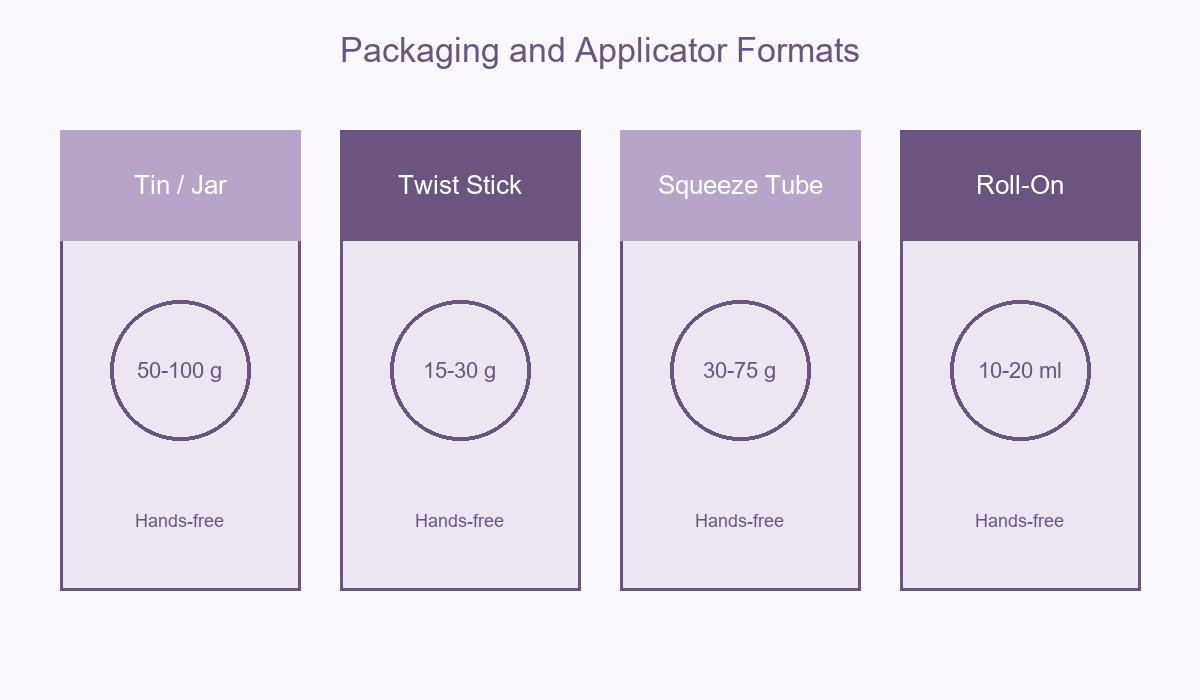
Packaging is where private label brands create visible differentiation and where unit economics are often won or lost. A balm can ship in a tin, a twist stick, a roll-on, a squeeze tube, or an airless pump, and each format carries different cost, fill rate, and consumer expectation.
5.1 Tins, Jars, and Wide-Mouth Containers (KONGDY)
Aluminium tins and wide-mouth jars deliver a classic apothecary look with low tooling cost and simple filling. They suit premium botanical positioning and larger fill weights such as 50 grams and 100 grams. KONGDY supports printed and unprinted tins with in-mould or sleeve decoration. Request tin and jar packaging options with fill weights.
5.2 Twist Sticks and Push-Up Balm Tubes (KONGDY)
Twist sticks and push-up tubes allow hands-free application, which consumers prefer for gym, sports, and on-the-go use cases. They require tighter fill-temperature control to avoid shrinkage gaps and air pockets. KONGDY runs stick filling on temperature-controlled lines with in-line weight verification. Get stick and push-up tube quotations.
5.3 Roll-On and Targeted Applicators (KONGDY)
Roll-on applicators and targeted metal-tip applicators deliver a metered dose to small areas such as temples, wrists, or knuckles. They work best with lower-viscosity balm and gel-balm hybrids. KONGDY engineers applicator fit and flow rate so the dose per stroke is consistent across the batch. Talk to our packaging engineers about applicator flow testing.
5.4 Labelling, Artwork, and Market Compliance (KONGDY)
Labels must carry ingredient lists in INCI format, net content, batch and expiry coding, manufacturer identification, and any market-specific warnings. Artwork errors are the most common cause of customs delays and relabelling costs. KONGDY pre-checks artwork against destination market labelling rules before plate production. Request an artwork compliance pre-check before plate charges are approved.
6. Pain Relief Balm OEM: Certification and Regulatory Compliance
Certification and compliance decide whether a balm can legally be sold, imported, and advertised in each target market. B2B buyers should treat the certification file as the first screening filter, not as a formality to collect at the end of negotiations.
6.1 ISO 22716 GMP Certification (KONGDY)
ISO 22716 is the internationally recognised Good Manufacturing Practice standard for cosmetics, covering premises, equipment, production, quality control, and documentation. A current certificate with an audited scope that matches balm manufacturing is the baseline requirement for any serious brand owner. KONGDY holds ISO 22716 GMP certification with annual third-party surveillance audits. Request the current ISO 22716 certificate and audit summary.
6.2 FDA Cosmetic and OTC Drug Positioning (KONGDY)
In the United States, a balm positioned purely for moisturising and skin conditioning is regulated as a cosmetic, while a balm making pain relief claims with a monographed active such as menthol or camphor falls under OTC drug rules. The positioning decision changes labelling, testing, and facility registration obligations. KONGDY supports both cosmetic and OTC monograph pathways and documents the intended positioning in the product specification. Schedule a US regulatory pathway review.
6.3 EU CPSR and Responsible Person Support (KONGDY)
Selling in the European Union requires a Cosmetic Product Safety Report prepared by a qualified safety assessor plus a Responsible Person established in the EU or UK. The CPSR depends on formulation, toxicological data, and stability results from the manufacturer. KONGDY supplies the technical data package that underpins the CPSR. Request the CPSR technical data package for your balm formula.
6.4 Asia and Emerging Market Registration (KONGDY)
Markets across Asia, the Middle East, and Latin America apply their own registration, notification, or import permit rules, sometimes requiring a local certificate of free sale or legalised documents. Early registration mapping prevents shipment holds at the border. KONGDY prepares registration-ready dossiers and legalisation support for destination markets. Get a registration roadmap for your destination markets.
7. Pain Relief Balm OEM: Manufacturing Process and Equipment
Understanding the manufacturing process helps B2B buyers ask the right technical questions and spot a supplier who is outsourcing steps rather than running them in-house. A controlled process is also what makes batch-to-batch consistency possible at commercial volume.
7.1 Raw Material Qualification and Incoming Inspection (KONGDY)
Every incoming lot of active, wax, butter, oil, and packaging component is inspected against specification, with identity testing and certificate-of-analysis verification before release to production. Weak incoming control is the most common root cause of later batch failures. KONGDY performs identity and COA verification on every incoming lot. Request the raw material qualification procedure.
7.2 Melting, Mixing, and Homogenisation (KONGDY)
Balm production uses jacketed vessels with controlled heating, variable-speed agitation, and homogenisation for emulsion systems. Temperature and mixing profiles are recorded as in-process parameters, because overheating degrades volatile actives such as menthol and essential oils. KONGDY records and archives every batch temperature and mixing profile. Talk to our process engineers about thermal control for volatile actives.
7.3 Filling, Sealing, and Weight Control (KONGDY)
Filling accuracy directly affects declared net content compliance and consumer perception. The line must control fill temperature, nozzle behaviour, and net weight with automated checkweighing and rejection of out-of-tolerance units. KONGDY operates temperature-controlled filling lines with automated checkweighing and documented rejection logs. Get a filling accuracy specification and net content compliance statement.
7.4 Batch Records and Traceability (KONGDY)
Complete batch records link every finished unit to its raw material lots, processing parameters, in-process results, and release decision. This traceability is what allows a brand owner to investigate a complaint or execute a targeted recall without destroying the whole inventory. KONGDY maintains GMP-standard batch records with full lot traceability. Request a sample batch record and traceability walkthrough.
8. Pain Relief Balm OEM: 7-Step Private Label Program
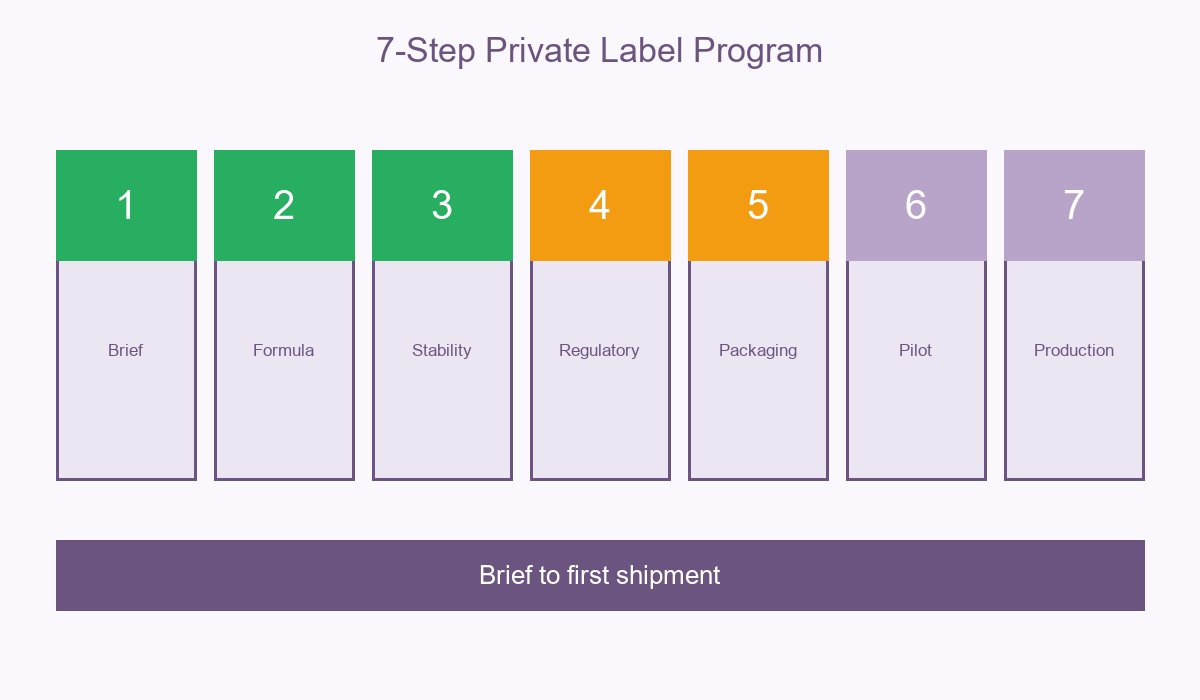
A structured private label program keeps a balm launch on schedule and prevents the two most expensive mistakes: sampling against a vague brief, and ordering packaging before the formulation is locked. The following sequence is the one KONGDY runs with brand owners.
8.1 Step 1: Product Brief and Market Mapping (KONGDY)
The brief defines target market, claims, price point, pack format, fill weight, and expected annual volume. Clear inputs here remove weeks of revision later. KONGDY's product managers turn your brief into a written technical specification within 5 working days. Submit your balm product brief and receive a technical specification draft.
8.2 Step 2: Formulation Development and Sampling (KONGDY)
Formulation development produces candidate formulas for sensory and performance evaluation, followed by sample submission with usage instructions and stability indications. Most balm projects converge within two or three sampling rounds. KONGDY issues development samples with full ingredient declarations so claims can be validated early. Request development samples within 10 working days.
8.3 Step 3: Stability and Safety Testing (KONGDY)
Once a formula is selected it enters accelerated stability, long-term stability, microbiological, and where relevant preservative efficacy testing. These results fix the shelf life claim and support regulatory dossiers. KONGDY runs stability and safety testing in its own qualified laboratories with documented protocols. Schedule a stability and safety testing plan.
8.4 Step 4: Regulatory File Preparation (KONGDY)
The regulatory file assembles formulation records, safety data, certificates, and labelling inputs required by the destination market. Preparing this file in parallel with packaging design avoids a last-minute launch delay. KONGDY prepares market-specific regulatory dossiers alongside packaging development. Request a regulatory file checklist for your market.
8.5 Step 5: Packaging Sourcing and Artwork Approval (KONGDY)
Packaging sourcing covers primary containers, closures, applicators, cartons, and labels, followed by artwork proofing against compliance rules. Tooling and plate charges are confirmed before production. KONGDY coordinates packaging sourcing and pre-checks artwork for destination compliance. Get packaging sourcing and artwork pre-check support.
8.6 Step 6: Pilot Batch and Validation (KONGDY)
The pilot batch validates the process at near-commercial scale, confirming fill weight, sensory profile, labelling accuracy, and pack-out quality. A signed pilot approval is the gate to commercial production. KONGDY produces pilot batches with full in-process documentation and formal approval sign-off. Book a pilot batch slot for your launch window.
8.7 Step 7: Commercial Production and Export (KONGDY)
Commercial production follows on validated processes, with batch release, certificate of analysis, and export documentation such as commercial invoice, packing list, and certificates of origin. Container loading is supervised and photographed for record. KONGDY manages batch release, COA issuance, and export documentation end to end. Confirm your production slot and export documentation requirements.
9. Pain Relief Balm OEM: B2B Buyer Evaluation Checklist
Before committing to a pain relief balm OEM partner, buyers should score suppliers against four objective categories. The checklist below reflects what experienced brand owners and importers verify during supplier qualification.
9.1 Certification and Facility Verification (KONGDY)
Verify ISO 22716 certificate validity, audited scope, facility address, and whether the supplier manufactures balm in-house or subcontracts filling. Ask for the certificate number and confirm it independently. KONGDY provides certificate copies with audited scope and welcomes on-site or virtual verification. Request ISO 22716 verification documentation.
9.2 Quality System and Documentation Depth (KONGDY)
Review change control, deviation management, corrective and preventive action records, and documentation control procedures. A supplier that cannot show a deviation report cannot manage quality at scale. KONGDY maintains documented change control and CAPA systems open to customer audit. Schedule a quality system review.
9.3 Technical and Testing Capability (KONGDY)
Confirm in-house capability for HPLC or GC assay, microbiological testing, stability chambers, and packaging compatibility testing. Outsourced testing adds cost and weakens traceability. KONGDY operates in-house analytical, microbiological, and stability testing laboratories. Talk to our laboratory team about testing capability verification.
9.4 Commercial Terms and Launch Readiness (KONGDY)
Compare unit price at realistic volume tiers, tooling charges, lead time, payment terms, Incoterms, sampling cost policy, and responsiveness during the enquiry stage. Commercial clarity at enquiry predicts commercial clarity at scale. KONGDY publishes tiered pricing and confirms tooling and lead time in writing. Request a tiered quotation and lead time confirmation for your launch volume.
10. Conclusion: Pain Relief Balm OEM Private Label Launch for B2B Brands
Pain relief balm OEM compresses the distance between a brand idea and a shelf-ready product, but only when the supplier's formulation capability, quality system, regulatory support, and packaging coordination are all genuinely in-house. Buyers who verify certification, testing capability, documentation depth, and commercial terms before ordering avoid the relabelling costs, stability failures, and border delays that damage launch schedules.
KONGDY's pain relief balm OEM and private label program covers the full journey: formula development with cooling, warming, and botanical actives, wax, butter, petrolatum, and emulsion base systems, tin, stick, tube, and roll-on packaging, ISO 22716 GMP certified production, in-house stability, microbiological and analytical testing, and regulatory dossiers for FDA cosmetic, OTC monograph, EU CPSR, and Asia market pathways. With 36 years of consumer health manufacturing experience and tiered volume pricing, the facility supports both first launch orders and long-term repeat supply agreements.
Request a free pain relief balm sample within 24 hours — KONGDY's team will confirm actives, base system, fill weight, and packaging format, then ship development samples with full ingredient declarations and stability indications so your team can evaluate sensory performance before committing to tooling.
Next steps for B2B buyers: send your product brief through the contact form to receive a written technical specification within 5 working days, a tiered MOQ and pricing schedule, tooling and lead time confirmation, and a regulatory file checklist for your destination market. Brand owners can additionally schedule a virtual or on-site factory audit at KONGDY's ISO 22716 certified facility to verify balm manufacturing capability, documentation systems, and quality partnership readiness ahead of private label production.